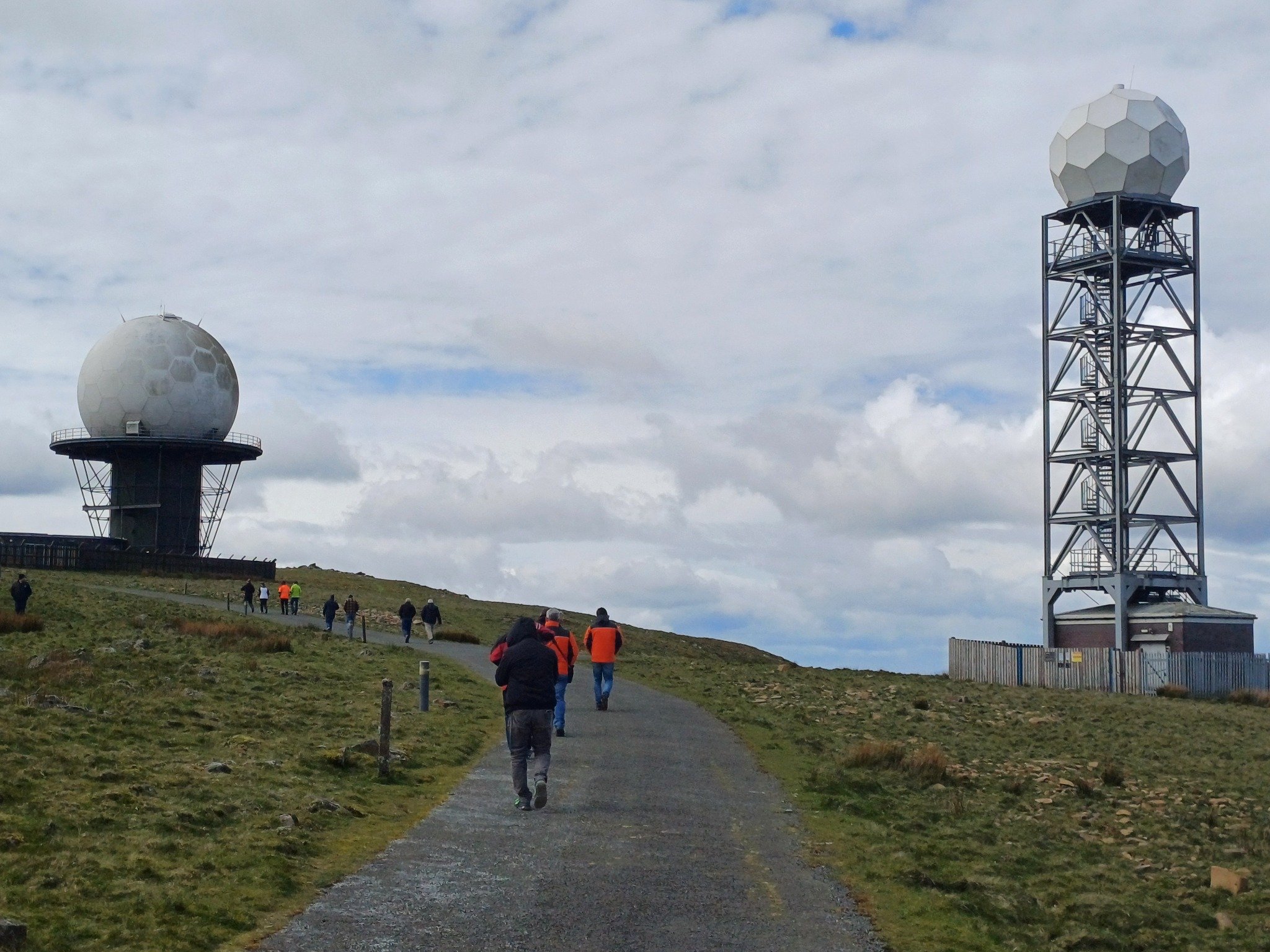
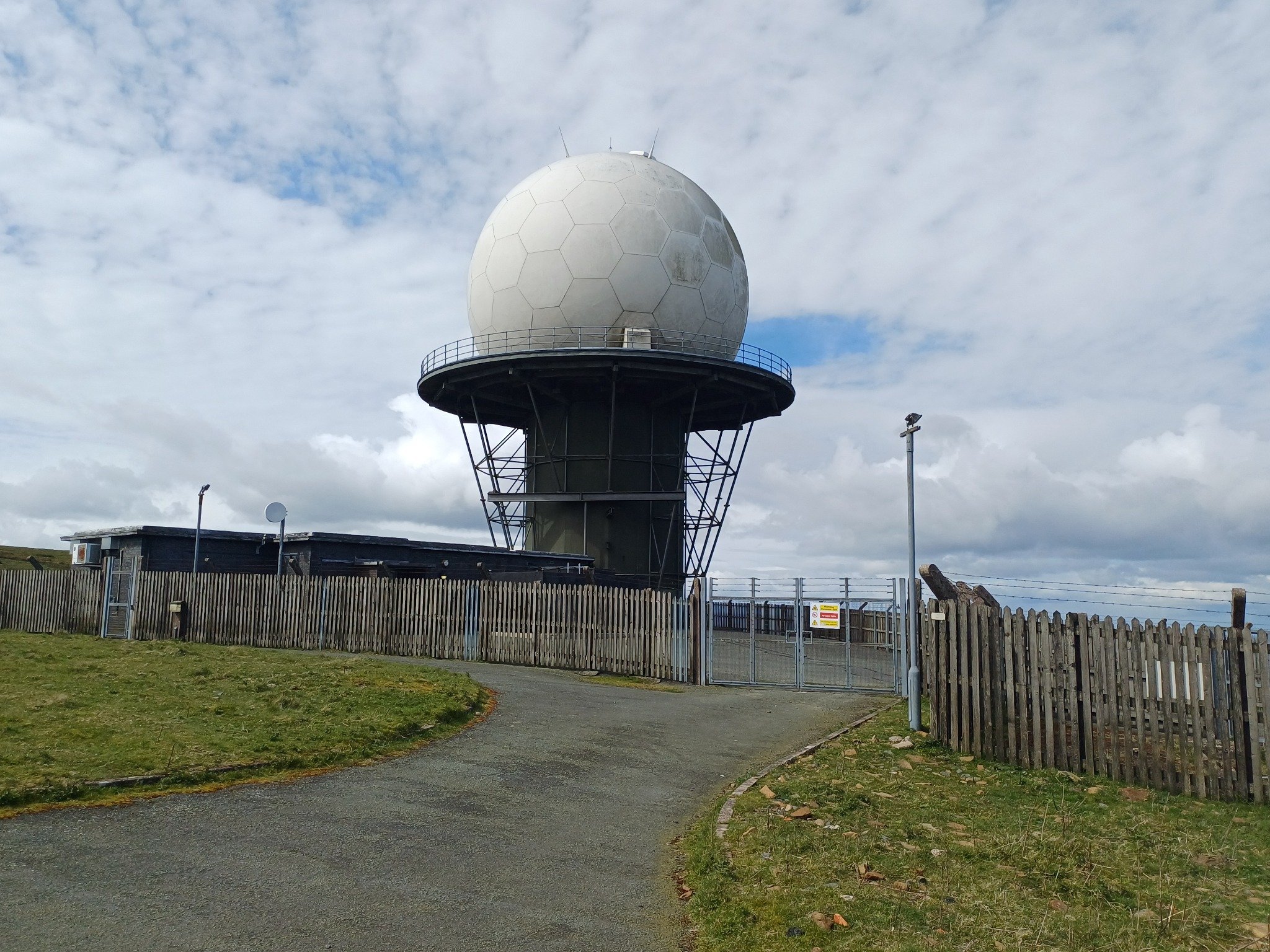
Clee Hill NATS Radar Tower
Project Summary
End Client: National Air Traffic Services (NATS)
Client: UK Land Communications Ltd (UKLC) on behalf of INDRA
Location: Clee Hill, South Shropshire, United Kingdom
Project Type: Co-mounted Primary Surveillance Radar (PSR) and Monopulse Secondary Surveillance Radar (MSSR) installation
Services Provided
- Structural Analysis
- Steel Tower Design
- Reinforced Concrete Foundation Design
- Steel Connection Design
- Fatigue Assessment
- Dynamic Analysis
- Vibration Assessment
- Geotechnical Coordination
- Construction Support
- Design Risk Assessment
1. Background
Beta Design Consultants (BDC) was appointed by UK Land Communications Ltd (UKLC), acting on behalf of INDRA and National Air Traffic Services (NATS), to undertake the structural design of a new radar tower installation at Clee Hill, South Shropshire.
The project forms part of the United Kingdom's critical aviation infrastructure network, providing long-range surveillance capability for air traffic management through both Primary Surveillance Radar (PSR) and Monopulse Secondary Surveillance Radar (MSSR) systems, together with associated communication equipment and maintenance infrastructure.
Located near the summit of Titterstone Clee Hill, approximately 533 metres above sea level, the project required the development of a highly robust structural solution capable of safely supporting sensitive radar equipment in one of the most exposed operating environments in the country.
BDC's commission encompassed the complete structural design of the steel tower, including the superstructure, steel connections, reinforced concrete foundations and supporting components. The scope also included detailed assessments of fatigue performance, vibration behaviour and long-term operational serviceability to ensure the structure would perform reliably throughout its design life.
2. Project Challenges
The project presented a number of complex engineering challenges resulting from the operational requirements of the radar systems, the exposed hilltop location and the stringent performance criteria associated with critical national infrastructure.
Critical National Infrastructure Requirements
The radar tower supports equipment forming part of the UK's air traffic management network and therefore required an exceptional level of structural reliability, robustness and serviceability.
The structural design was governed not only by strength and stability requirements but also by strict operational performance criteria to ensure uninterrupted radar operation and accurate surveillance capability.
The design addressed:
- Strict limitations on torsional rotation to maintain radar alignment and minimise signal distortion.
- Control of vertical plane rotation to preserve antenna pointing accuracy.
- Verification of structural stiffness under operational and maintenance loading.
- Long-term structural performance under repeated environmental loading.
- Fatigue assessment resulting from continuous wind-induced stress cycles.
- Robustness appropriate for nationally significant infrastructure assets.
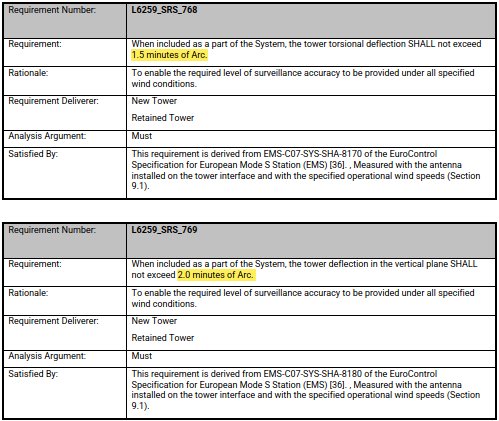
Operational movement limits specified by the radar supplier included:
-
Maximum torsional rotation of 1.5 arcminutes.
-
Maximum vertical plane rotation of 2.0 arcminutes
Exposed Hilltop Environment
Situated on elevated ground with very little surrounding shelter, the site is exposed to severe environmental conditions throughout the year. The elevated terrain significantly increases wind speeds and turbulence, creating structural demands considerably greater than those encountered on conventional developments.
The structural design therefore considered:
- Extreme wind loading in accordance with Eurocode requirements.
- Topographic amplification effects due to the site's elevation.
- Wind-induced vibration and structural oscillation.
- Snow loading on platforms and access systems.
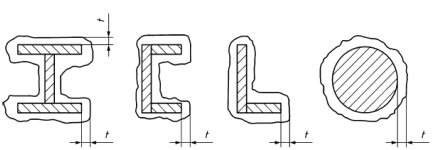
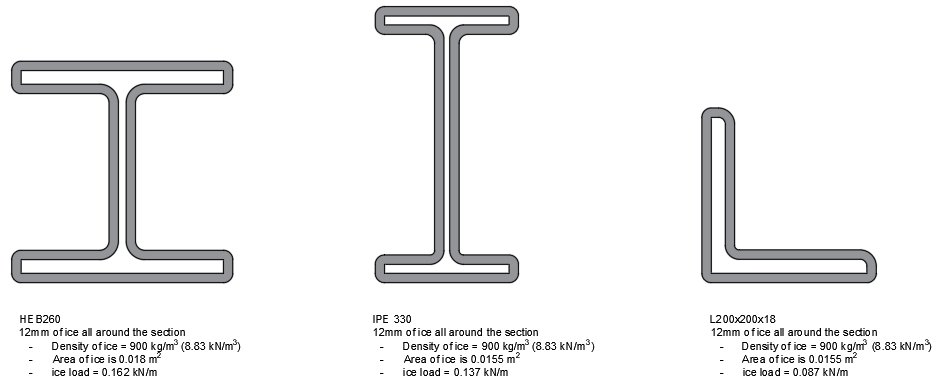
- Atmospheric icing on structural members and radar equipment.
- Seismic loading in accordance with the UK National Annex.
- Combined environmental loading scenarios.
- Fatigue effects generated by fluctuating wind pressures throughout the operational life of the structure.
These environmental conditions directly influenced the sizing of structural members, connection detailing and foundation design.
Complex Structural Integration
The radar installation consists of several interconnected structural and operational systems that collectively influence the behaviour of the tower.
The structure supports:
- Primary Surveillance Radar (PSR)
- Monopulse Secondary Surveillance Radar (MSSR)
- Radome enclosure and support frame
- Telecommunications and telemetry antennas
- Mechanical hoist systems
- Maintenance platforms and access stairs
- Safety barriers and walkways
- Cable trays and associated services
The structural design required careful consideration of:
- Load transfer between the radar pedestal and primary tower structure.
- Interaction between vertical and horizontal loading.
- Differential stiffness between structural components.
- Global and local structural stability.
- Dynamic behaviour during operation.
- Connection rigidity and member interaction.
- Transfer of overturning and uplift forces into the foundations.
3. Structural Design Brief
Beta Design Consultants was responsible for the complete structural design and verification of the Clee Hill radar tower, ensuring that every component met the required strength, stability, serviceability and durability criteria.
The design scope included:
- Self-supporting steel radar tower
- Antenna support pedestal
- Primary steel framing members
- Secondary steelwork and maintenance platforms
- Steel connections and splice details
- Base plates and holding-down bolts
- Reinforced concrete foundations
- Fatigue assessment
- Structural dynamics and vibration analysis
The completed structure comprises:
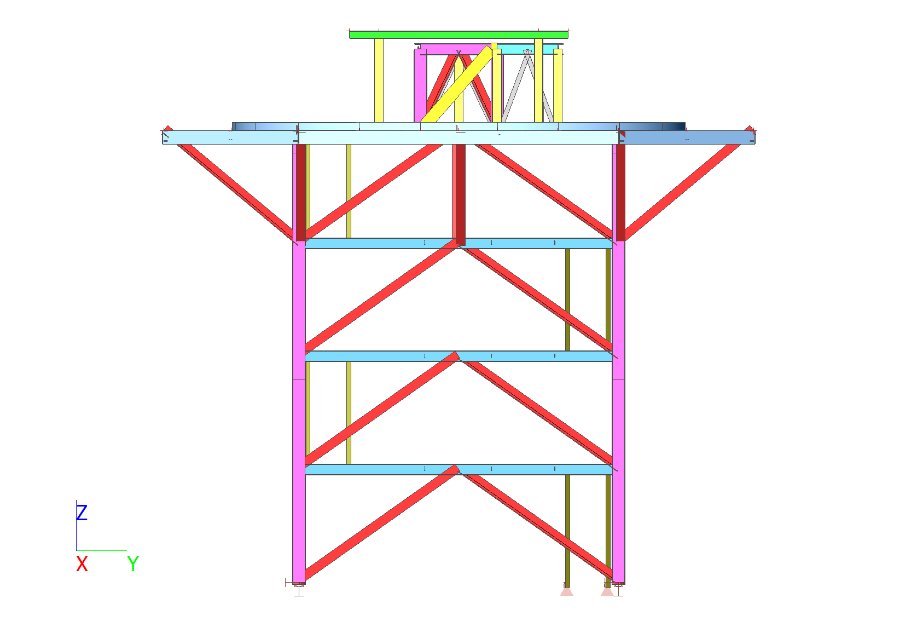
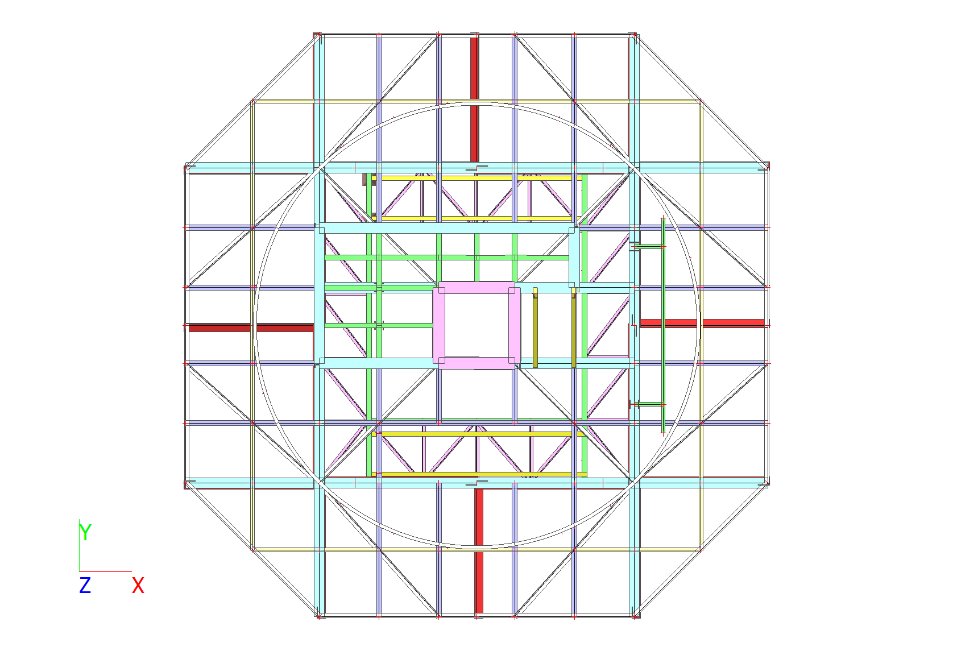
- Four primary steel columns arranged on a 7.08 m × 7.08 m square grid.
- Braced steel framing providing lateral stability.
- Multiple maintenance platforms.
- A radar support pedestal extending to approximately 11.8 m above ground level.
- An upper octagonal platform measuring approximately 14.5 m × 14.5 m.
- Integrated access stairs, safety barriers and maintenance facilities.
The tower was designed to achieve a minimum operational design life of 25 years, providing a durable and resilient solution capable of supporting critical radar equipment in a demanding environmental setting.
4. Structural Analysis and Engineering Assessment
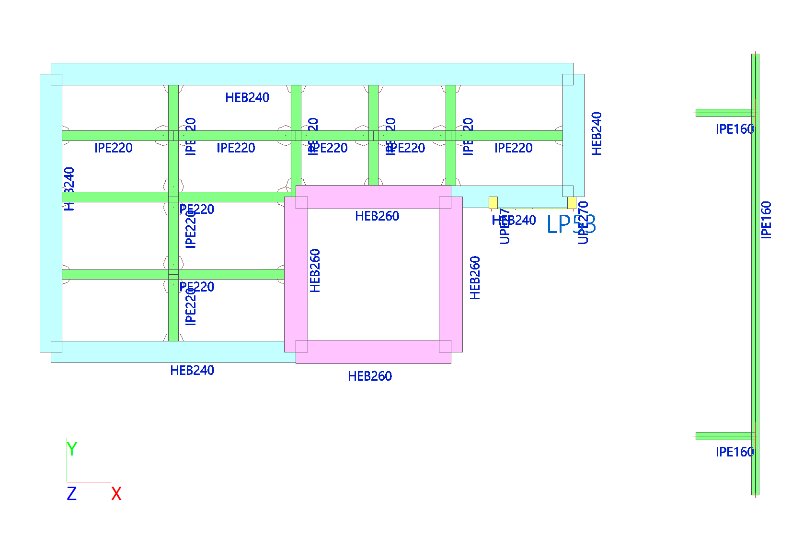
To evaluate the structural behaviour of the tower under all anticipated loading scenarios, Beta Design Consultants developed a detailed three-dimensional finite element model.
The analytical model incorporated realistic representations of member properties, connection behaviour and support conditions, enabling the design team to accurately predict the performance of the completed structure under both operational and environmental loading combinations.
Permanent Actions
The analysis considered the effects of:
- Self-weight of the steel tower
- Radar equipment loads
- Maintenance platforms, stairs and handrails
- Cable management systems
- Secondary steelwork
Operational and Maintenance Loading
The structural model also accounted for operational loading associated with routine inspection and maintenance activities, including:
- Maintenance personnel loading
- Temporary maintenance equipment
- Hoist and lifting operations
- Concentrated service loads
Environmental Actions
Given the exposed location of the site, comprehensive environmental loading scenarios were assessed, including:
- Static and dynamic wind loading
- Snow loading
- Ice accumulation
- Thermal effects
- Seismic actions
Structural Behaviour Assessment
Detailed analysis was undertaken to verify:
- Global structural stability
- Second-order (P–Δ) effects
- Member buckling resistance
- Bracing performance
- Connection stiffness
- Foundation interaction
To complete the engineering assessment, Beta Design Consultants utilised advanced structural design software, including:
- SCIA Engineer for global structural analysis and stability assessment.
- IDEA StatiCa for detailed steel connection design.
- Tekla Tedds for reinforced concrete foundation calculations and design verification.
This comprehensive analysis ensured the tower satisfied all structural performance requirements while maintaining the high levels of reliability demanded by critical national infrastructure.
5. Serviceability and Dynamic Performance
As the performance of radar systems relies on maintaining extremely accurate antenna alignment, serviceability and dynamic behaviour formed a critical part of the structural design.
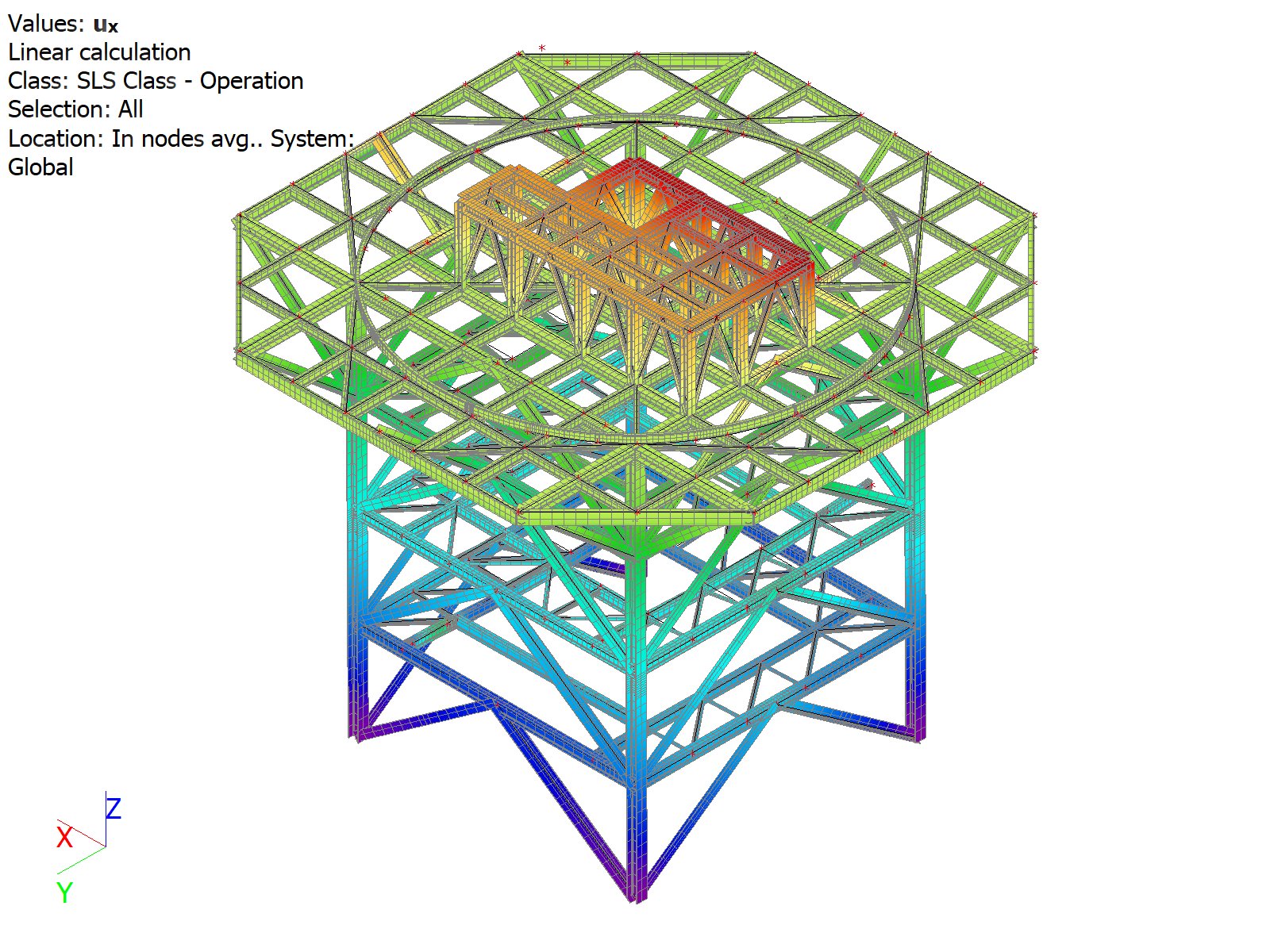
Beta Design Consultants carried out detailed serviceability assessments to verify that structural movements remained within the strict limits specified by the radar supplier.
The assessment included verification of:
- Vertical rotation of the radar support structure
- Torsional rotation of the tower
- Lateral displacement under wind loading
- Overall structural stiffness
- Dynamic response characteristics
- Potential resonance effects
The completed analysis demonstrated compliance with all specified performance criteria.
| Performance Parameter | Acceptance Criterion | Calculated Value |
|---|---|---|
| Vertical Plane Rotation | ≤ 2.0 arcminutes | 1.75 arcminutes |
| Torsional Rotation | ≤ 1.5 arcminutes | 1.41 arcminutes |
| Top Lateral Displacement | Controlled | Approximately 6 mm |
The results confirmed that the structure possesses sufficient stiffness to support the radar equipment without compromising operational performance or long-term reliability.
Dynamic Assessment
To ensure the long-term operational performance of the radar tower, Beta Design Consultants carried out a detailed modal analysis to evaluate the dynamic behaviour of the structure and assess the potential risk of resonance.
The analysis was undertaken to determine the tower's natural frequencies and verify that they remained sufficiently separated from the operational frequencies generated by the radar equipment.
The assessment confirmed that:
- The first natural frequency of the tower is approximately 3.31 Hz.
- The antenna excitation frequency lies between 1.03 Hz and 1.09 Hz.
- Adequate frequency separation exists between the structure and the operational equipment.
- Resonance effects are not expected during normal operation.
The results demonstrated that the tower possesses appropriate dynamic characteristics to safely support the radar systems while maintaining reliable operational performance throughout its design life.
6. Fatigue Assessment and Long-Term Structural Reliability
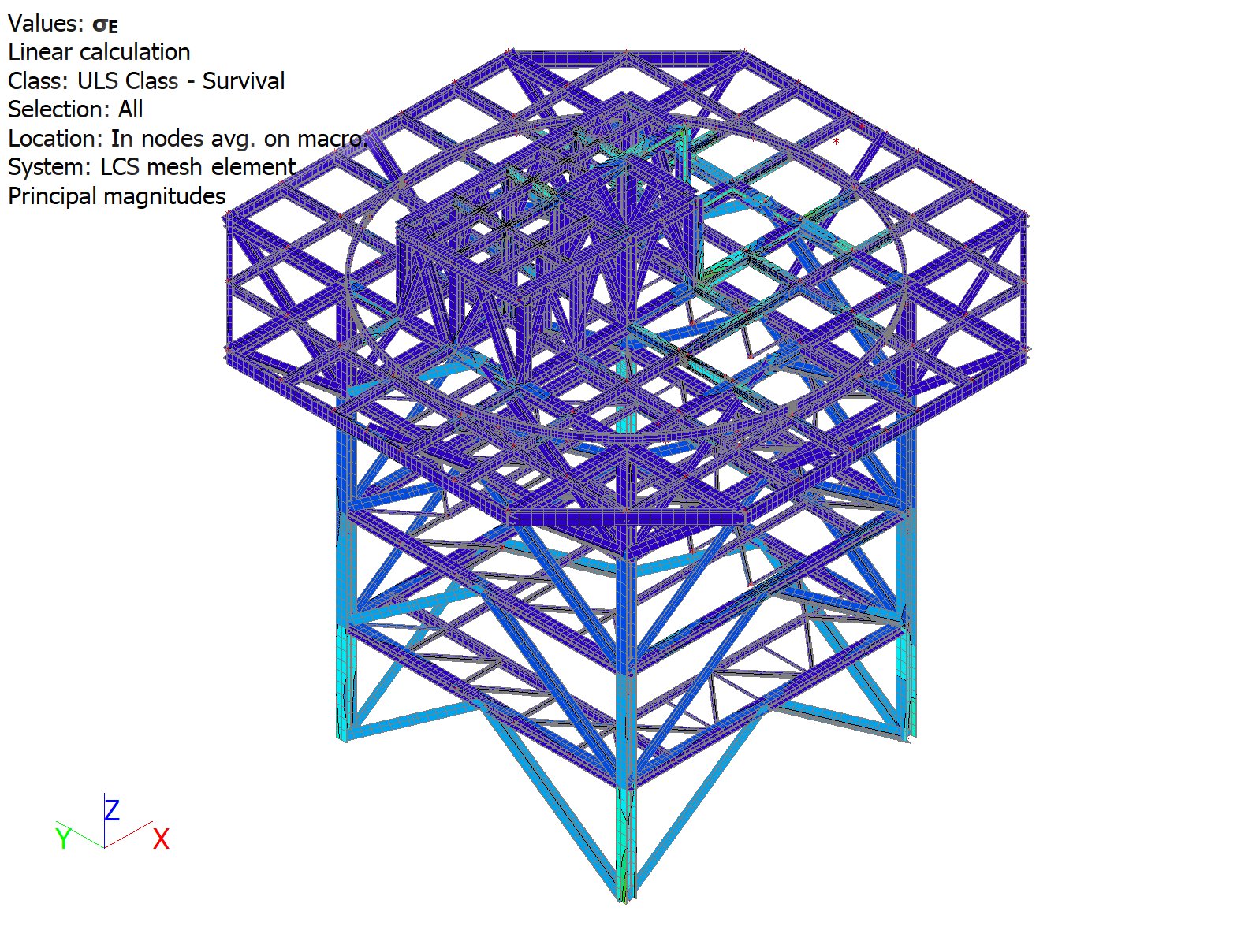
Given the exposed location of the Clee Hill radar tower and the continuous operation of the radar systems, fatigue performance was a critical aspect of the structural design.
Beta Design Consultants undertook a detailed fatigue assessment in accordance with the relevant Eurocode provisions for steel towers and mast structures to verify the long-term performance and durability of the structure.
The assessment included:
- Determination of site-specific wind characteristics.
- Evaluation of stress ranges within structural members.
- Assessment of fatigue-sensitive details and connections.
- Calculation of cumulative fatigue damage.
- Verification of the required operational design life.
Particular attention was given to the performance of:
- Main columns.
- Primary beams.
- Bracing systems.
- Welded details.
- Bolted connections.
- Base plate assemblies.
The assessment demonstrated:
- A maximum cumulative fatigue damage ratio of 0.644.
- Full compliance with Eurocode fatigue criteria.
- Negligible fatigue damage in secondary members.
- Satisfactory structural performance over the required design life.
The analysis confirmed that no additional strengthening measures were required to achieve the specified minimum operational design life of 25 years, providing confidence in the tower's long-term structural reliability under continuous environmental loading.
7. Foundation and Connection Design
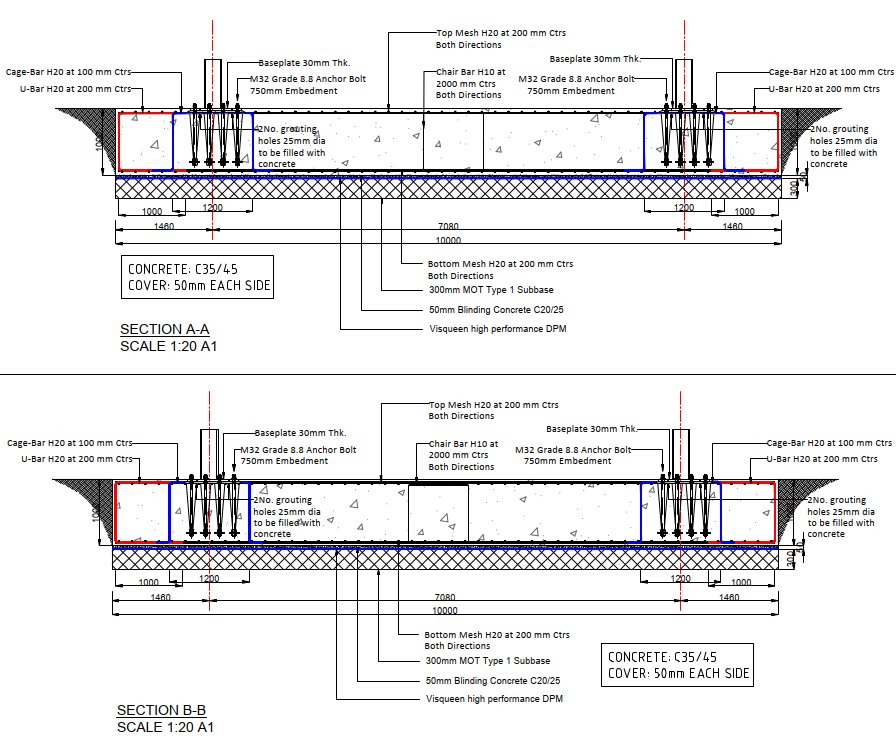
Beta Design Consultants undertook the detailed design of the reinforced concrete foundations and all associated steel connection systems supporting the radar tower.
The foundation design considered a range of site-specific geotechnical and structural factors, including:
- Site-specific geotechnical parameters.
- Ground bearing capacity.
- Settlement behaviour.
- Wind-induced overturning moments.
- Uplift resistance.
- Sliding resistance.
- Ultimate and serviceability load combinations.
The connection design included:
- Base plate verification.
- Holding-down bolt design.
- Beam-to-column connections.
- Bracing connections.
- Splice connections.
- Platform support details.
Connection arrangements were carefully developed to:
- Facilitate efficient fabrication and transportation.
- Simplify on-site erection.
- Improve construction safety.
- Minimise future maintenance requirements.
By integrating the foundation and connection design with the overall structural strategy, Beta Design Consultants delivered a practical, buildable and durable solution capable of supporting the demanding operational requirements of this critical aviation infrastructure project.
8. Safety in Design and Risk Management
Beta Design Consultants adopted a proactive safety-in-design approach throughout the project in accordance with the Construction (Design and Management) Regulations (CDM). Potential risks associated with construction, operation and long-term maintenance were identified early in the design process, allowing practical mitigation measures to be incorporated into the final solution.
Construction Stability
The erection of a steel radar tower in an exposed hilltop environment required careful consideration of temporary stability during construction.
To minimise these risks, the design included:
- Development of detailed erection sequences.
- Stability checks for partially completed structures.
- Coordination with temporary works requirements.
- Identification of critical lifting operations.
Fabrication and Assembly
The design was developed to simplify fabrication and installation while reducing construction risks.
Measures included:
- Detailed connection schedules.
- Coordination of splice locations.
- Compliance with the National Structural Steelwork Specification (NSSS).
- Specification of fabrication tolerances.
Durability and Asset Protection
To maximise the long-term performance of the structure in its exposed environment, a range of durability measures were incorporated into the design, including:
- Hot-dip galvanising of all structural steelwork.
- Corrosion protection measures.
- Coordination of earthing and lightning protection systems.
- Provision for future inspection and maintenance access.
Operational Safety
Safe access for inspection and maintenance was an important design consideration throughout the project.
The completed design provides:
- Permanent access stairs and maintenance platforms.
- Safety barriers and fall protection systems.
- Hoist systems for equipment handling.
- Safe access routes for operational personnel.
By embedding safety into every stage of the design process, Beta Design Consultants delivered a solution that supports safe construction, efficient maintenance and reliable long-term operation of this critical national infrastructure asset.
9. Project Outcome
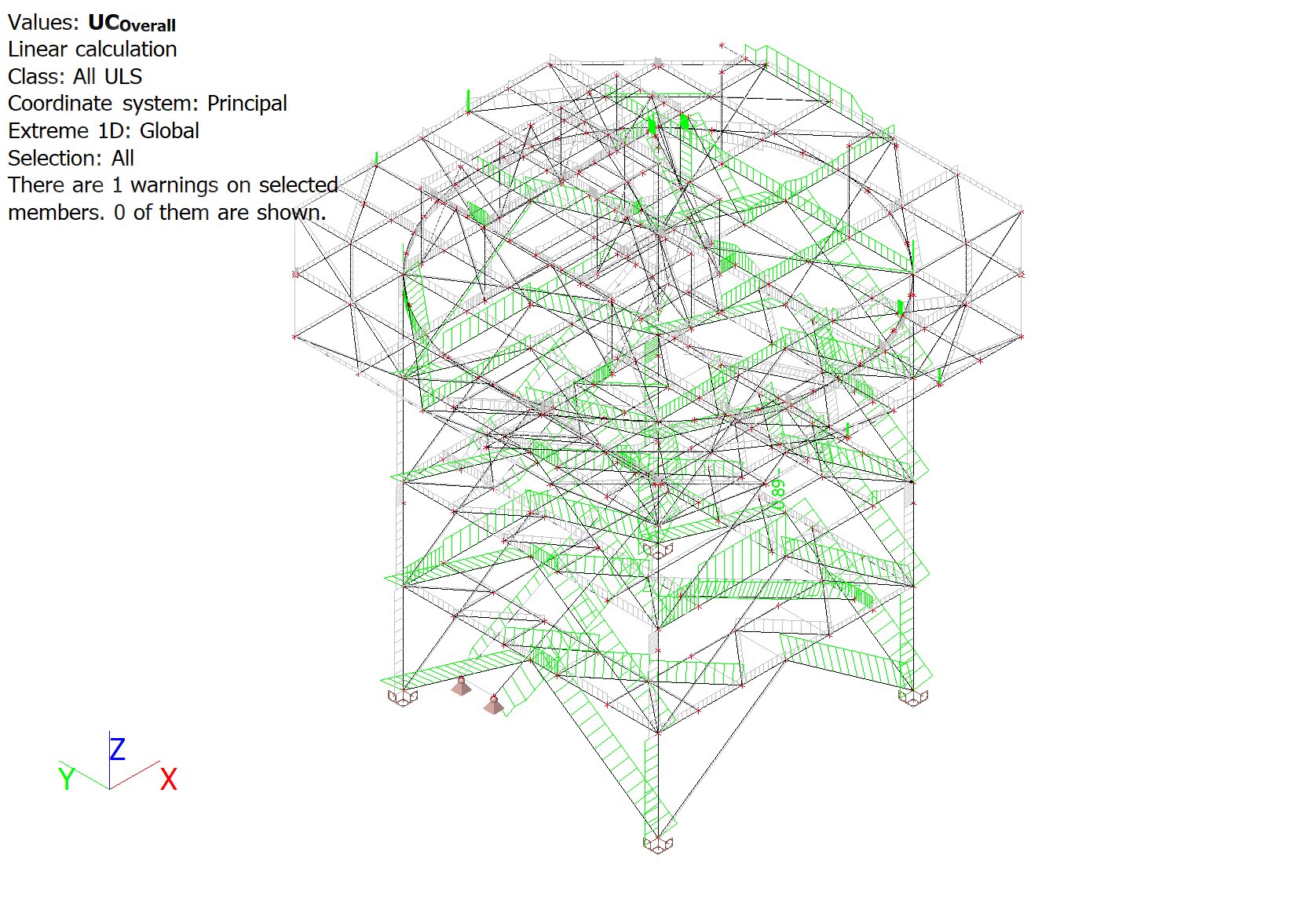
Beta Design Consultants successfully delivered the complete structural engineering design package for the Clee Hill NATS Radar Tower, including the steel superstructure, reinforced concrete foundations, steel connections and supporting infrastructure.
The project demonstrates the practice's capability to:
- Design critical national infrastructure assets.
- Deliver advanced structural analysis under complex loading conditions.
- Undertake fatigue and vibration assessments.
- Integrate structural, geotechnical and operational requirements.
- Develop safe, practical and buildable engineering solutions.
- Manage risks associated with fabrication, erection and long-term operation.
The completed design provides National Air Traffic Services (NATS) and its project partners with confidence that the radar installation will achieve the required levels of safety, durability and operational performance throughout its design life.
10. Beta Design Consultants Capability
Beta Design Consultants provides specialist engineering services for infrastructure, telecommunications and other mission-critical assets across the UK and internationally.
Our expertise includes:
- Steel tower and mast design.
- Structural analysis and finite element modelling.
- Fatigue and vibration assessment.
- Dynamic response analysis.
- Steel connection design.
- Reinforced concrete foundation design.
- Geotechnical coordination.
- Existing structure assessment.
- Safety-led engineering design.
By combining advanced structural analysis with practical construction knowledge, Beta Design Consultants delivers resilient, efficient and technically robust engineering solutions for complex infrastructure projects, supporting clients from concept design through to construction and long-term asset performance.
Related projects
BP GF Gas Plant Asset Integrity and Refurbishment
Read More
Bus Depot Electrification Harrow
Read More
Concept Design of Cité Administrative Koloma
Read More
Structural Assessment of Henley Masonry Arch Bridge
Read More
Peckham Arch Condition Survey & Life Extension Consulting Services
Read More
Pembroke Road Footbridge - Structural Investigation & Strengthening
Read More
Concept Design of Sedhiou Bridge and Roads Network
Read More
Nant Melyn Bridge Inspection for Assessment
Read More
Action Court Warehouse Extension
Read More
Planning Permission for 21 Boston Road Townhouse Conversion
Read More
Brentford Waterfront Block B and C Temporary Works Design
Read More
Brentford Waterfront Block K Temporary Works Design
Read More
CFRP and HPC Concrete Strengthening for Brindleyplace
Read More
Engine Yard Punching Shear Slab Strengthening
Read More
CPS House Jacketing to Strengthen RC Beams
Read More
BP Deep Water Sump Assessment and Concrete Repair Design
Read More
Planning Application for Three Story Residential Building
Read More
BP Heater Foundation Concrete Repair
Read More
BP GF Gas Plant – Slug Catcher Foundation Walls RC Repair
Read More
Fulham Palace Road Temporary Works Design
Read More
Value Engineering for Warehouse and Office Building
Read More
Harwell Campus-Concrete Strengthening
Read More
Helmsley Place-Steel Connections Design and Detailing
Read More
Planning Permission for New Warehouse, Ealing
Read More
Three Story Warehouse Steel Structure Design
Read More
Kennedy Institute Extension - Flat Slab Punching Shear Strengthening
Read More
Planning Permission for a Basement in a Conservation Area
Read More
London Hippodrome Roof Extension – Structural Design and Detailing
Read More
Polybags Ltd Warehouse Extension in Lyon Way
Read More
One West Point – Design of Support System for Cladding
Read More
Structural Design of 3 Storey Building
Read More
Queens Rise- Steel Structure Connection Design and Detailing
Read More
St Peter’s Hospital Staff Accommodation, Piled Rafts Design
Read More
Grove Park Gardens 4 Storey Residential Development
Read More
LABSA Sulphonation Plant Erbil
Read More
Energy from Waste Plant - Process Water Drainage Design
Read More
Spire Academy (Horizon Academy) Car Park Refurbishment
Read More
RAAC Investigation and Structural Strengthening
Read More
Northside Garages Structural Investigation
Read More