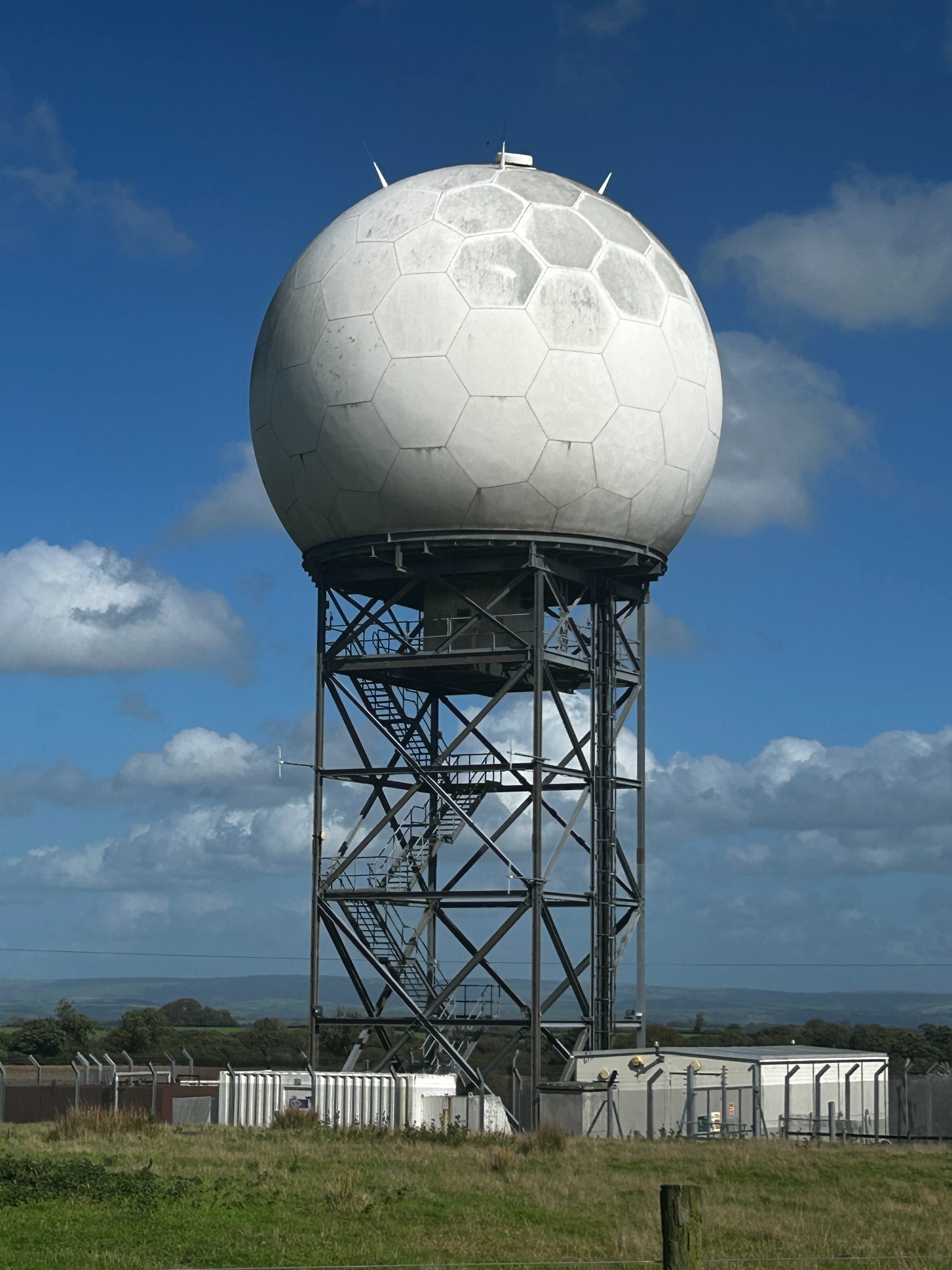
Burrington NATS Radar Tower
Project Summary
End Client: National Air Traffic Services (NATS)
Client: UK Living Conditions Ltd (UKLC)
Location: Burrington, Devon, United Kingdom
Project Type: 20 m Steel Radar / Radome-Support Tower and New Foundation Design
Services Provided
- Structural Design
- Steel Tower Design and Modular / DfMA Development (wider tower programme)
- Finite Element Analysis
- Steel Connection Design
- Base Plate and Anchor Design
- Reinforced-Concrete Foundation and Geotechnical Design
- Wind Loading and Global Stability Verification
- Construction-Stage Design Verification
- Fabrication and Installation Coordination (wider tower programme)
1. Project Background
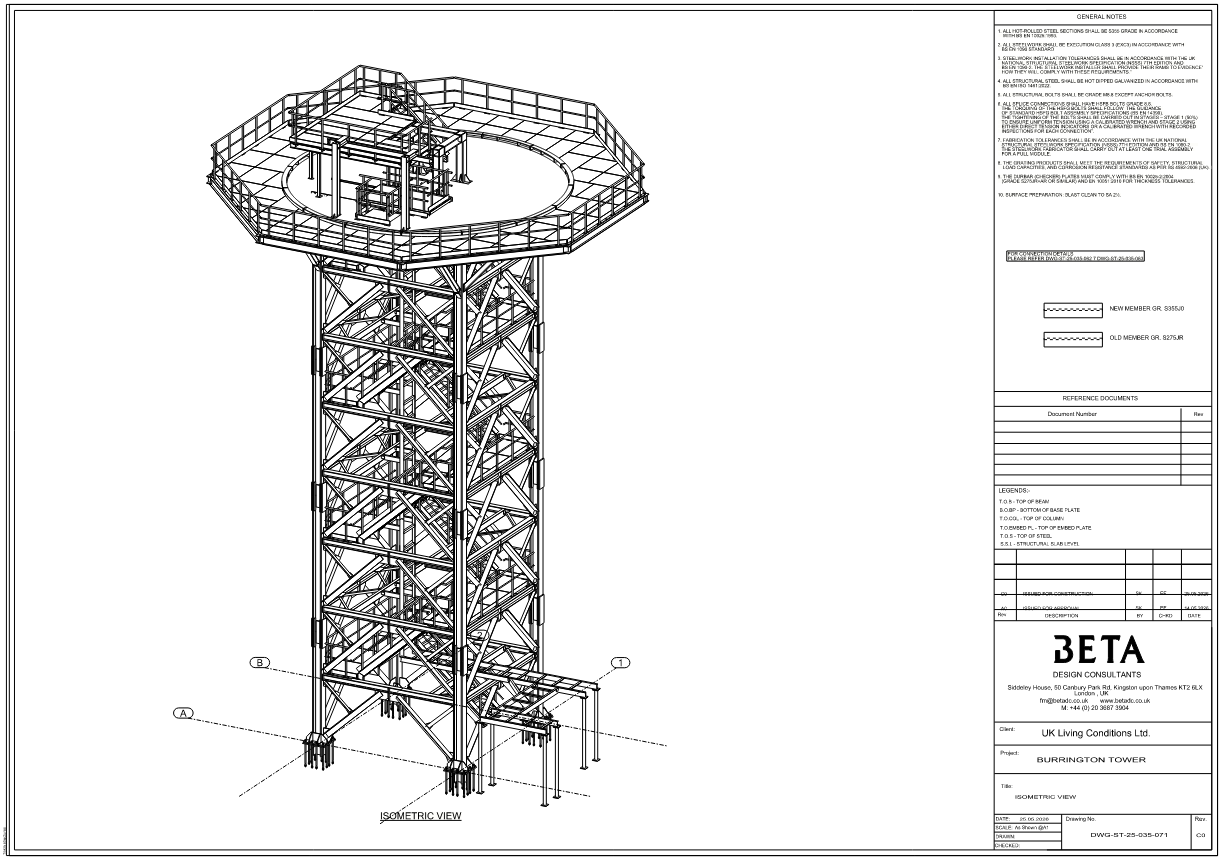
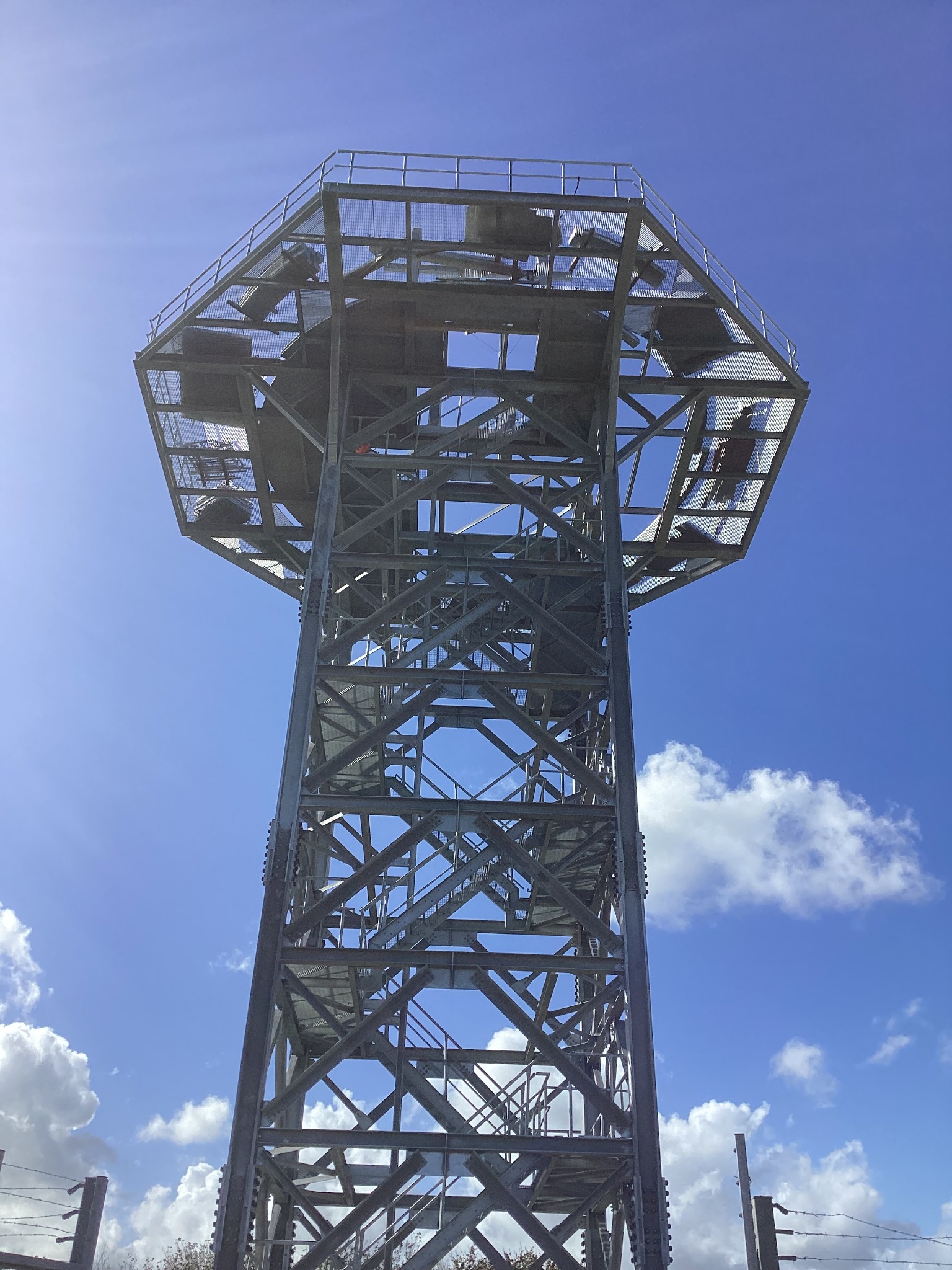
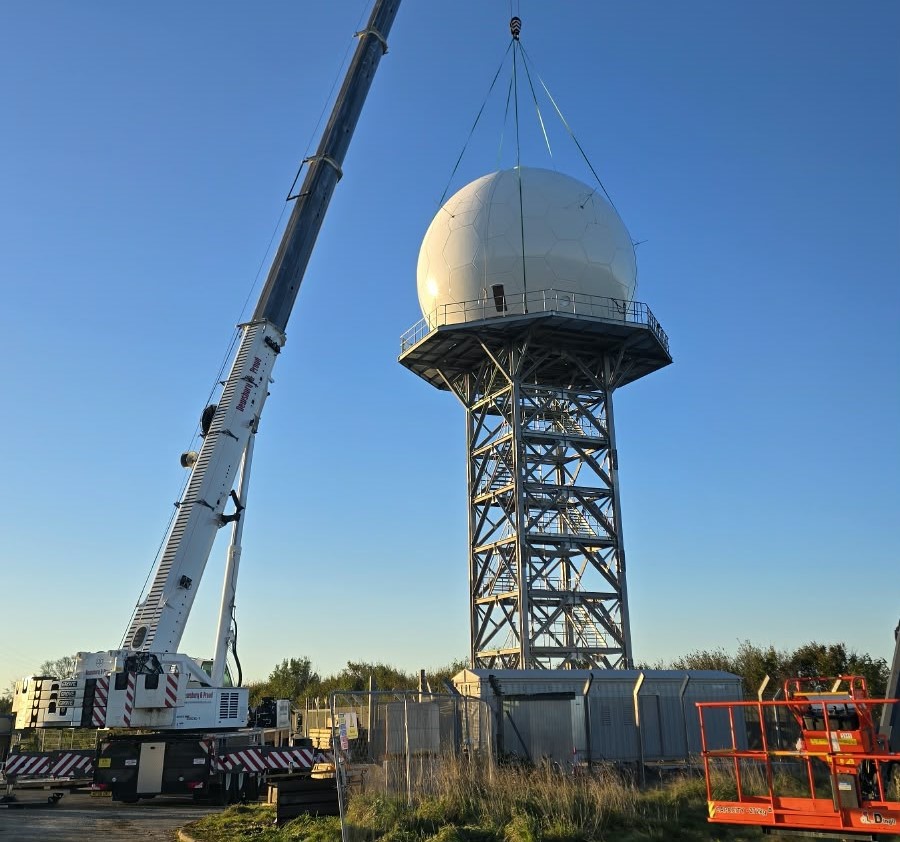
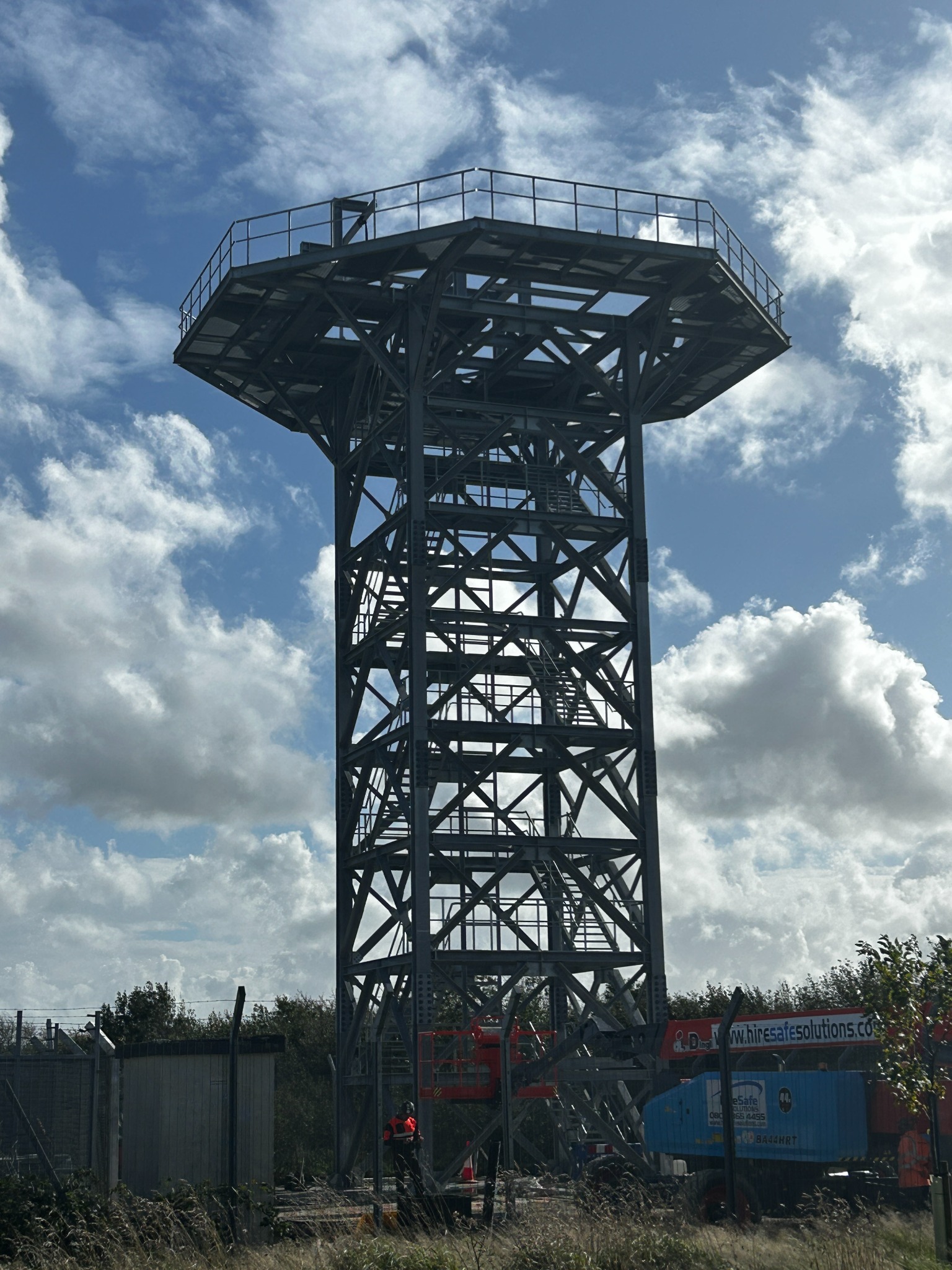
Beta Design Consultants (BDC) supported the Burrington radar infrastructure project in Devon as part of a wider programme of replacement radome-support towers. The new 20 m steel tower is designed to carry a radome at its upper platform, with an approximately 10 m base diameter and 12.5 m maximum diameter. The project required close integration of the tower structure, supporting foundation, access arrangements and construction methodology.
BDC was appointed by UK Living Conditions Ltd to undertake the structural design of the new tower foundation. BDC also contributed to the modular steel tower solution developed for the wider radar programme.
2. Engineering Brief and Design Challenges
The foundation had to accommodate tower self-weight, radar equipment and significant wind actions while meeting geotechnical and structural performance requirements. The engineering approach considered operational and extreme survival wind scenarios and the transfer of loads through tower legs, base plates, anchors and reinforced concrete.
The wider programme required structural stiffness, transportability and practical installation across multiple radar sites. These considerations informed the modular tower arrangement and coordination of structural andoperational requirements.
3. Beta’s Scope of Services
- Reinforced-concrete foundation structural design and geotechnical verification.
- Review of tower reactions and governing load combinations, including wind effects.
- Global stability checks for bearing, sliding and overturning.
- Reinforcement design and bending, shear and punching-shear verification.
- Steel base-plate and anchor-bolt analysis at the tower–foundation interface.
- Design risk review and coordination of foundation construction requirements.
- Construction-stage foundation verification using concrete cube test results.
4. Modular Steel Tower and Support Arrangement
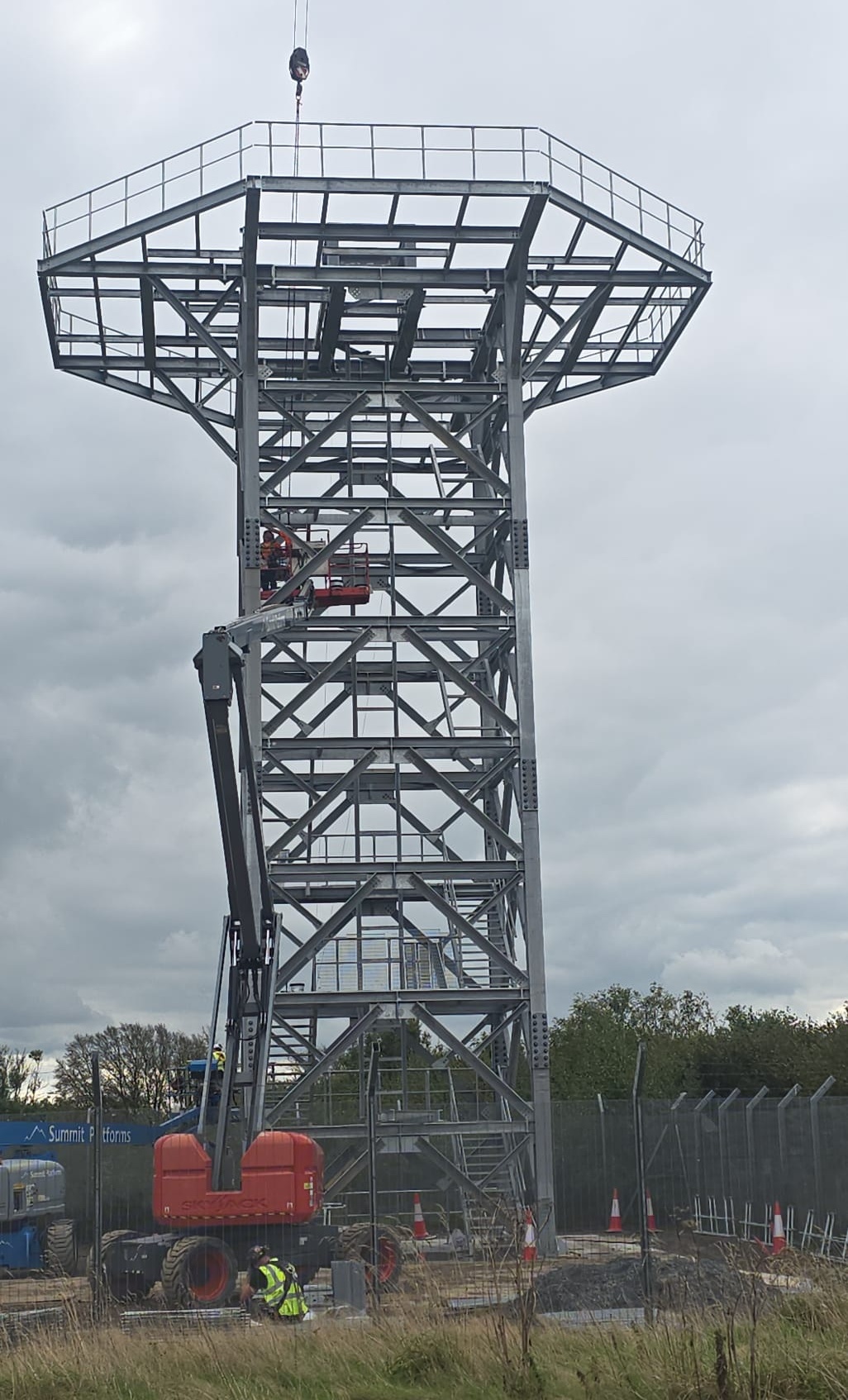
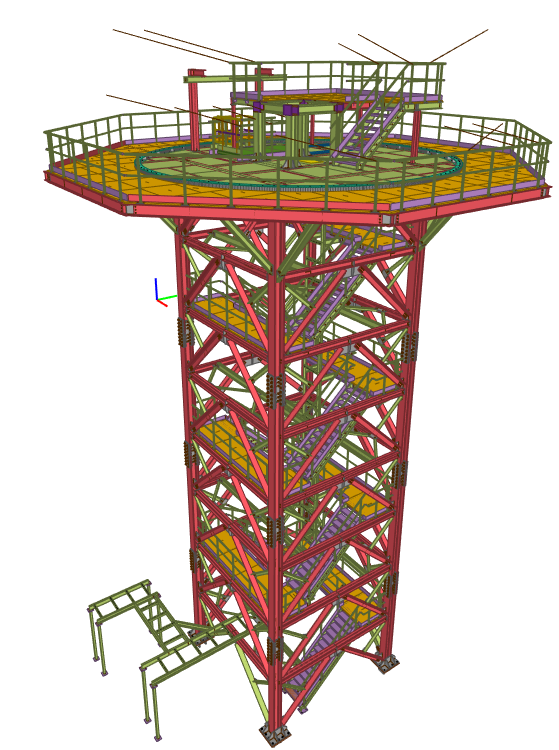
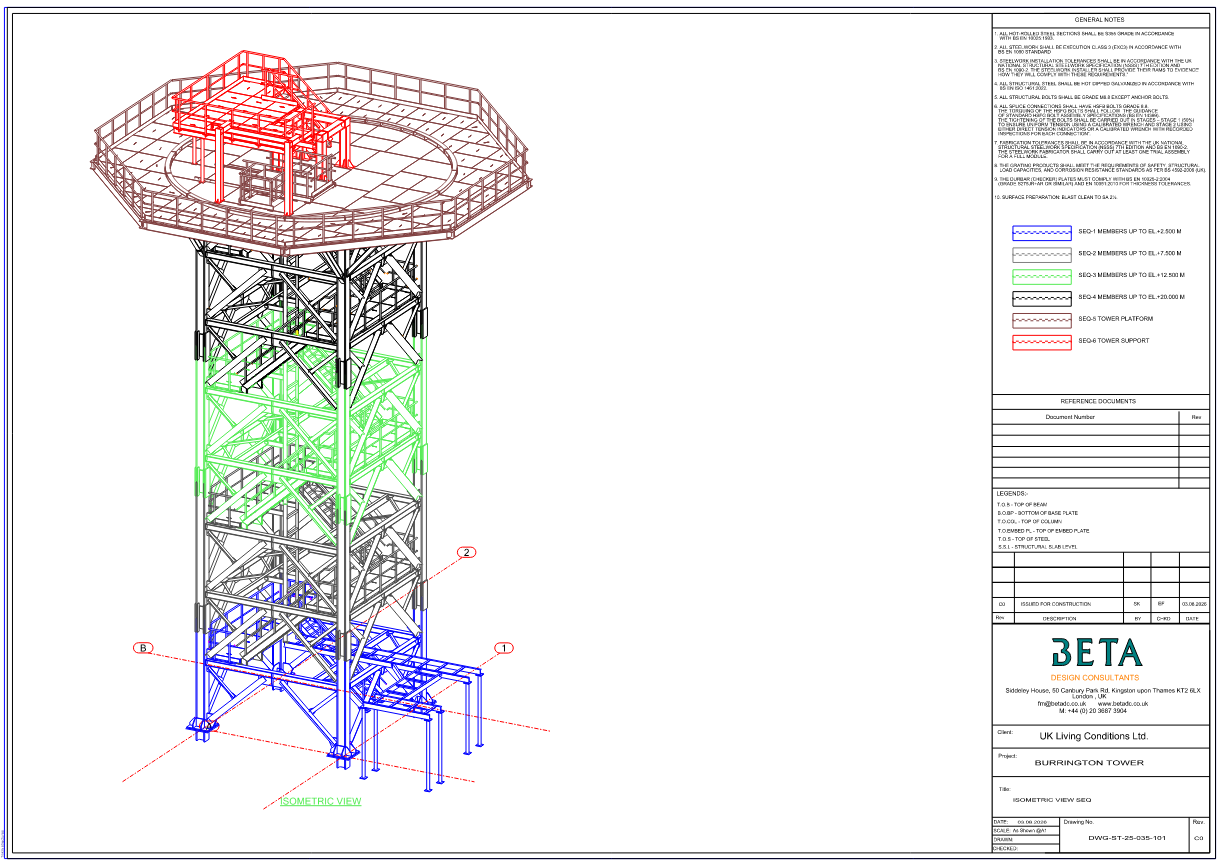
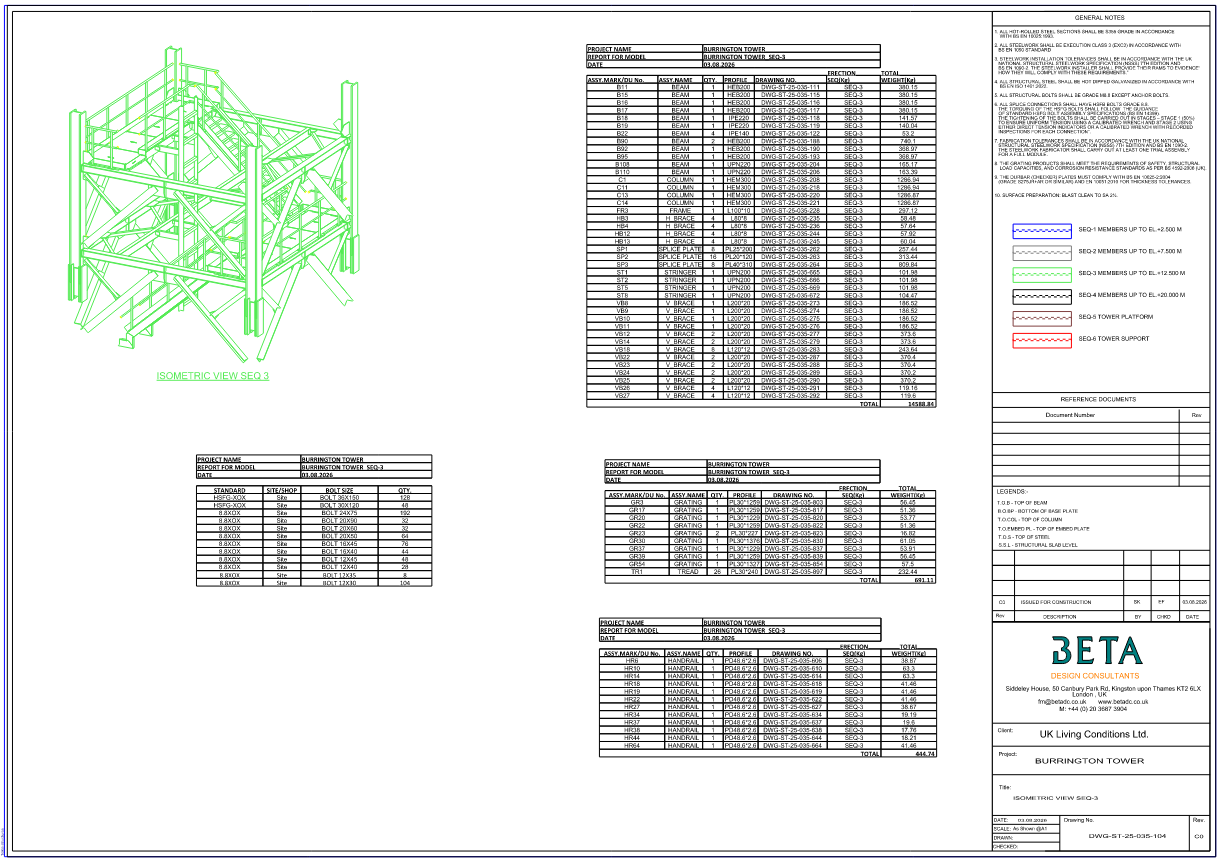
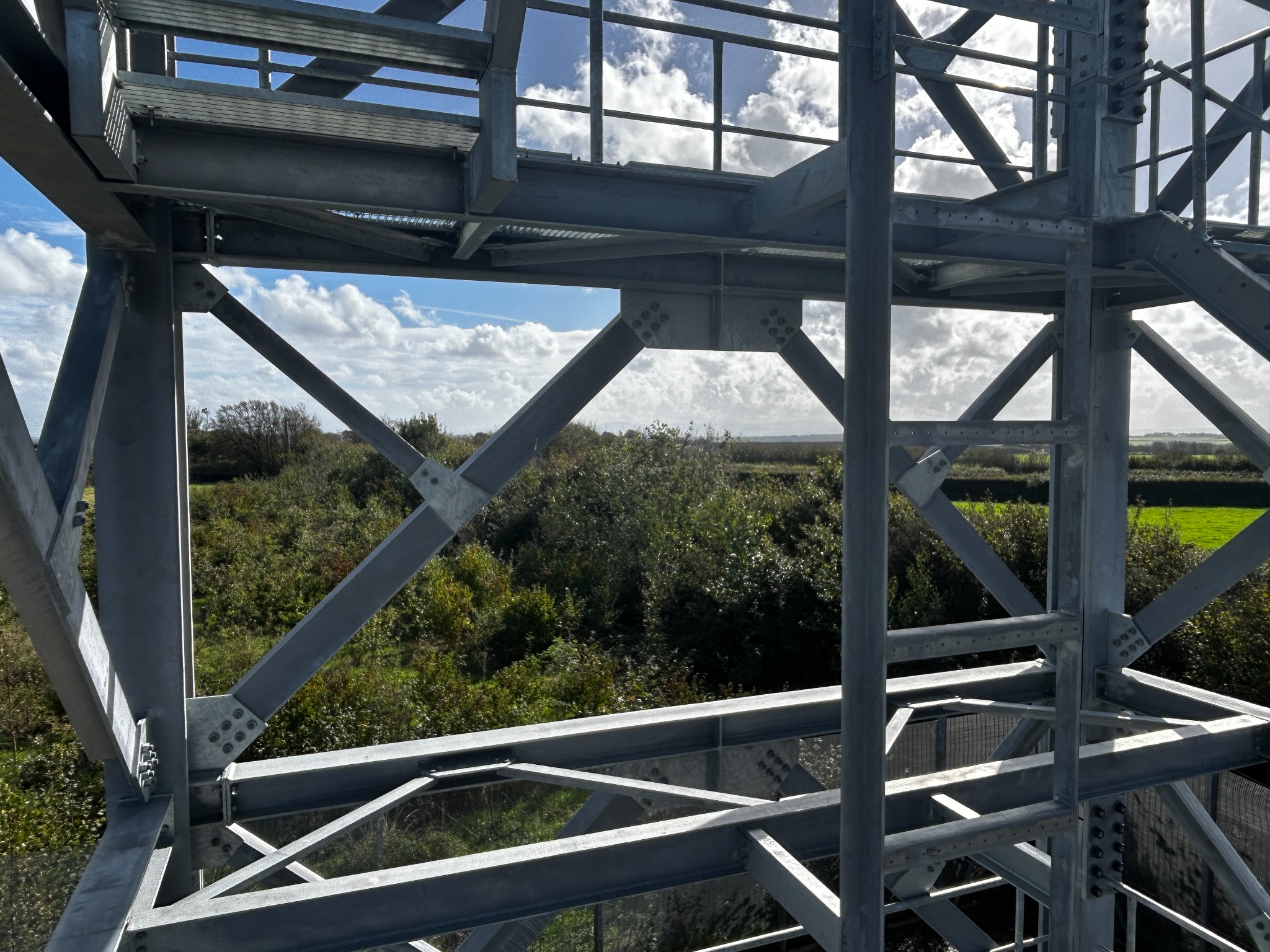
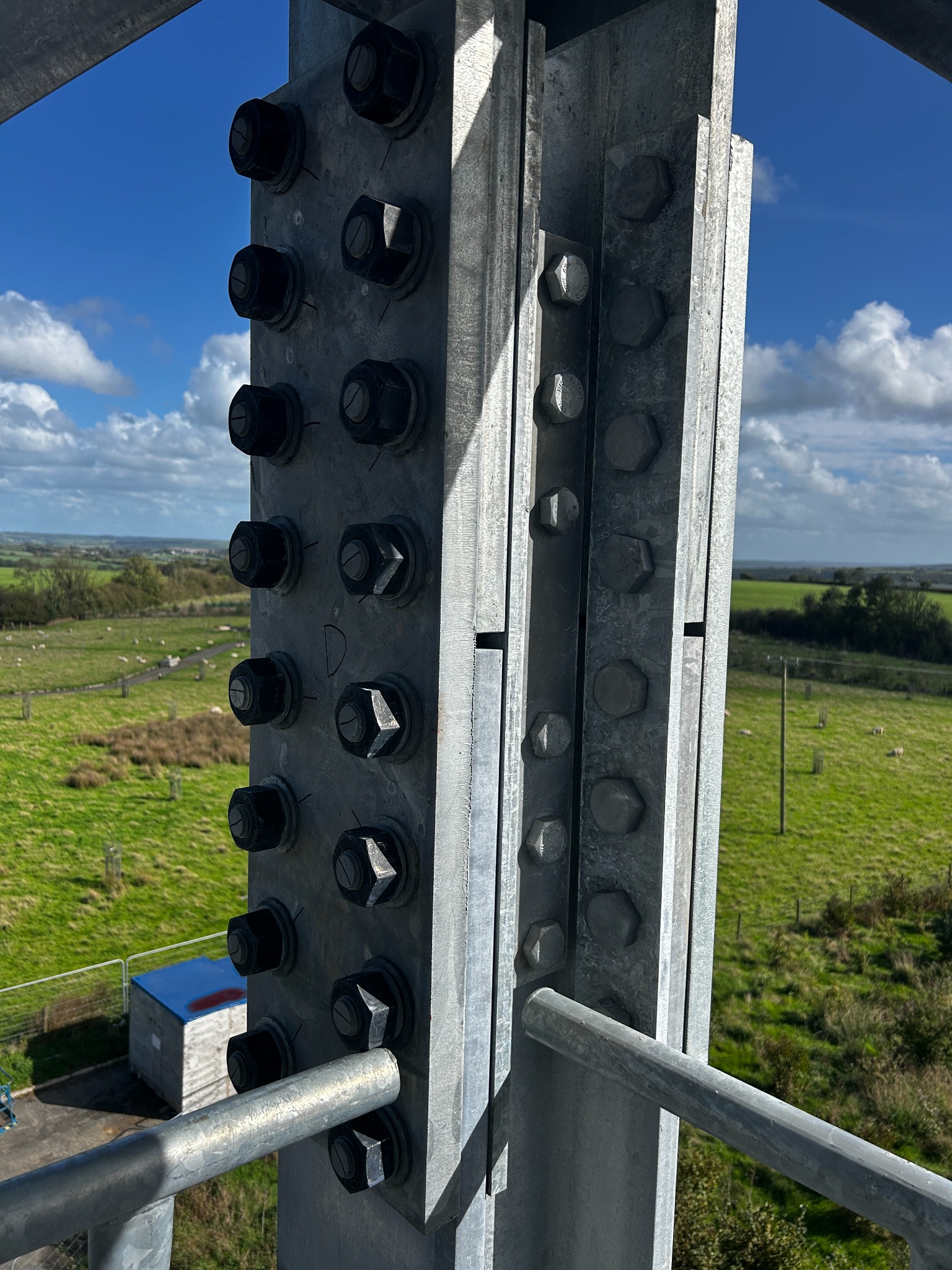
The replacement tower uses a braced steel lattice arrangement to provide a direct load path between the elevated platform and foundation. The wider modular design strategy employed repeatable intermediate sections approximately 5 m long, supporting fabrication, transport and erection. Bolted connections and bracing contribute to overall stiffness and buildability.
4.1 BIM and Operational Coordination
The wider NATS radar tower programme incorporated Building Information Modelling (BIM) to coordinate structural design with operational, maintenance and fabrication requirements. The coordinated design approach considered interfaces such as hoist beams, access hatches, cable management routes and access for antenna maintenance.
The programme-level BIM strategy included development to Level of Detail (LOD) 350, supporting review of the relationship between structural steelwork and operational equipment before construction. For Burrington, this approach provided a useful coordination framework for the elevated platform, bracing and access arrangements. The extent of site-specific LOD 350 deliverables remains subject to project-record confirmation.
This BIM-led approach linked structural engineering, operational requirements, fabrication information and installation planning within the wider modular tower strategy.
5. Wind Loading and Structural Reactions
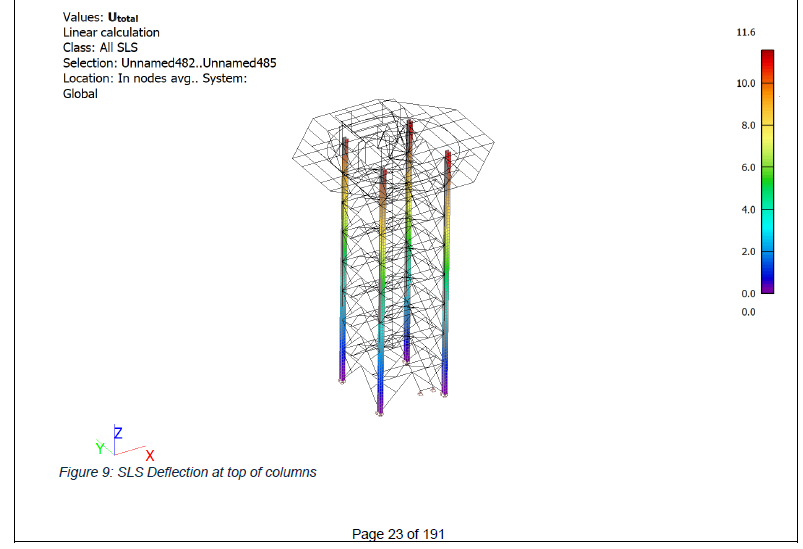
Foundation design was based on tower reactions obtained from structural analysis and evaluated under relevant load combinations. Wind exposure was considered for operating and survival conditions, including forces acting on the tower frame and radome. The assessment incorporated simultaneous forces and moments at the four main support locations.
6. Base Plates, Anchors and Connection Design
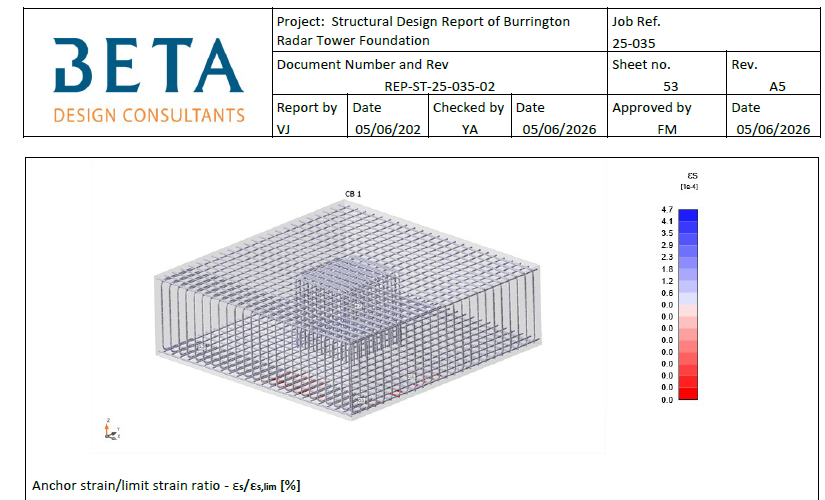
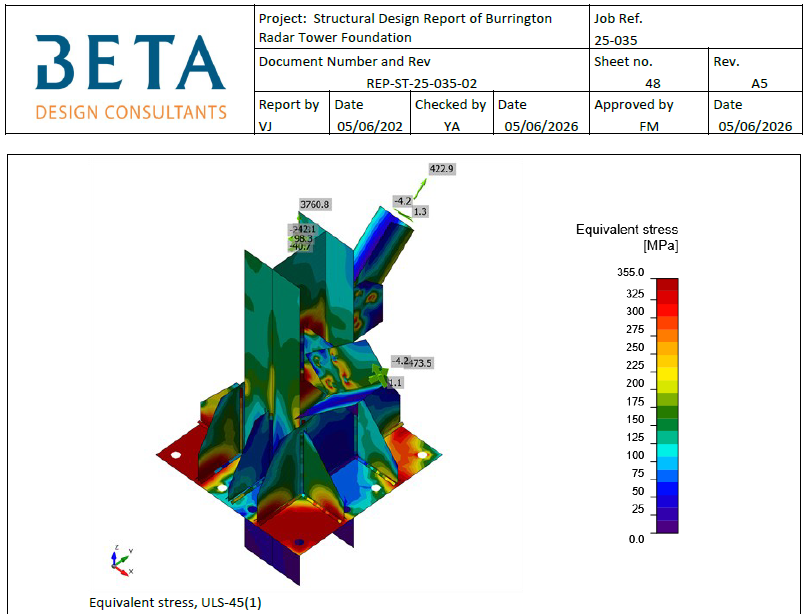
The tower-leg-to-foundation connection was assessed as a critical interface. IDEA StatiCa analysis considered compression, shear, moment and uplift through steel base plates and anchor assemblies, including interactions between steel components, anchors and concrete.
7. Design Verification and Quality Assurance
The foundation design was reviewed against concrete cube test results recorded after the pour. Construction-stage verification helped check the design basis against available material-strength evidence. The engineering documentation also addressed reinforcement arrangements, anchor requirements, foundation protection and coordination with site constraints.
8. Construction and Installation Considerations
Modular framing, accessible bolted interfaces, bracing and integrated access arrangements support fabrication and erection planning. At foundation level, accurate setting-out of tower supports and anchors is essential to successful installation.
8.1 Installation and Lifting Strategy
The modular steel tower arrangement was developed with consideration for transportation, lifting and site assembly. Repeatable structural sections enabled the erection process to be considered in manageable stages, with particular attention to lifting access, temporary stability, connection accessibility and the sequence of assembling the steel framework and elevated platform.
At Burrington, coordination between the tower support arrangement, foundation connections and construction methodology was important to establishing a practical installation strategy. This approach aligned permanent structural design requirements with fabrication and construction considerations, while recognising the access and operational constraints typical of specialist radar infrastructure sites.
9. Project Benefits
|
Engineering focus |
Project value |
|
Integrated structural design |
Coordinated tower reactions, foundation behaviour and steel-to-concrete interfaces. |
|
Wind and stability verification |
A documented design basis for operational and extreme loading conditions. |
|
Site-specific foundation design |
Foundation checks informed by ground investigation and relevant Eurocodes. |
|
Constructability |
Clearer interfaces for anchors, reinforcement, setting-out and tower erection. |
|
Quality assurance |
Construction-stage verification informed by concrete cube test results. |
|
Repeatable engineering approach |
Lessons from the modular tower programme applicable to specialist infrastructure. |
10. Outcome and Beta Design Consultants Capability
The Burrington project demonstrates BDC’s capability to combine structural modelling, foundation design, geotechnical interpretation, steel connection analysis and construction-stage verification for specialist radar infrastructure. The design work established a coordinated technical basis for the replacement tower foundation and critical support interfaces.
Related projects
BP Deep Water Sump Assessment and Concrete Repair Design
Read More
BP Heater Foundation Concrete Repair
Read More
BP GF Gas Plant Asset Integrity and Refurbishment
Read More
BP GF Gas Plant – Slug Catcher Foundation Walls RC Repair
Read More
Bus Depot Electrification Harrow
Read More
Stage 50 Wycombe Film Studios Village
Read More
Energy from Waste Plant - Process Water Drainage Design
Read More
Stage 50 Bovingdon Airfield Studios
Read More
Concept Design of Cité Administrative Koloma
Read More
Structural Assessment of Henley Masonry Arch Bridge
Read More
Peckham Arch Condition Survey & Life Extension Consulting Services
Read More
Pembroke Road Footbridge - Structural Investigation & Strengthening
Read More
Concept Design of Sedhiou Bridge and Roads Network
Read More
United Downs Deep Geothermal Power Plant
Read More
Wycombe Air Park- Data Centre
Read More
Nant Melyn Bridge Inspection for Assessment
Read More
Clee Hill NATS Radar Tower
Read More
Hartlepool Solar Farm
Read More
Action Court Warehouse Extension
Read More
Brentford Waterfront Block B and C Temporary Works Design
Read More
Brentford Waterfront Block K Temporary Works Design
Read More
Leisure Swimming Pool House Design
Read More
Planning Application for Three Story Residential Building
Read More
Fulham Palace Road Temporary Works Design
Read More
Value Engineering for Warehouse and Office Building
Read More
Three Story Warehouse Steel Structure Design
Read More
Planning Permission for a Basement in a Conservation Area
Read More
London Hippodrome Roof Extension – Structural Design and Detailing
Read More
Polybags Ltd Warehouse Extension in Lyon Way
Read More
Structural Design of 3 Storey Building
Read More
Queens Rise- Steel Structure Connection Design and Detailing
Read More
St Peter’s Hospital Staff Accommodation, Piled Rafts Design
Read More
Grove Park Gardens 4 Storey Residential Development
Read More
Coast Drive Visitor Centre, Watersport and Beach Huts
Read More
Northside Garages Structural Investigation
Read More
RAAC Investigation and Structural Strengthening
Read More
Spire Academy (Horizon Academy) Car Park Refurbishment
Read More
Helmsley Place-Steel Connections Design and Detailing
Read More
Sprinkler Tank Base Design within Existing High-Rise Residential Towers
Read More
Planning Permission for 21 Boston Road Townhouse Conversion
Read More
Planning Permission for New Warehouse, Ealing
Read More
Kennedy Institute Extension - Flat Slab Punching Shear Strengthening
Read More
One West Point – Design of Support System for Cladding
Read More